
"Hainan agriculture"
200 article(s) found
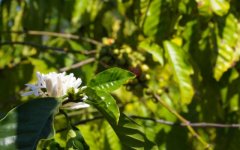
The difference between Hainan coffee beans and Yunnan coffee beans Hainan coffee and Yunnan small coffee beans taste
What are the respective characteristics of coffee beans from these two places? Yunnan small-grain coffee belongs to the Katim species (a variety of Arabica), which is an improved variety of Tibika among the Arabica species, with 25% of the genes of the Robosta species. In the mountainous area with an elevation of 800m to 1800m, the temperature is about 21.5℃ and the annual precipitation is 700~1000mm. It takes 8 to 10 months for the fruit to mature.

Chinese Coffee Development Agricultural Research Institutes promote Chinese Coffee
At this point, the author's mood is agitated and dignified. Today, when Chinese coffee, especially Yunnan small-grain coffee, has developed to large-scale industrialization through the persistent cultivation of several generations of Chinese mainland and after several ups and downs, it is not easy to be rated as a first-class product by the International Coffee Organization (ICO). The author believes that Yunnan small-grain coffee can quickly rise in Chinese mainland and China's agricultural scientific research.

Analysis on the Development Environment and advantages of Coffee Industry in Yunnan Province
Analysis on the development of coffee consumption at home and abroad from an international point of view, the world is in a trend of steady growth.

Description of Historical and Cultural Origin and Flavor of Chinese Coffee cultivation introduction of Grinding scale varieties
Description of the Historical and Cultural Origin of Coffee in China Flavor description Grinding scale Variety introduction Coffee production in Yunnan Province has been developed since the mid-1950s, mainly planted in Shuangjiang Farm and Dehong Sub-Bureau in Lincang area, covering an area of 18.67 hectares. it is also planted in small areas in Shaofang, Hekou, Lujiang, Jinghong, Olive Dam and other fields. Since 1957, the local environment is suitable for coffee growth.

The difference between small seed, medium seed and large seed of coffee how does the brand brew flavor describe the taste
Coffee small seed, medium seed, large seed of the difference between brands how to brew flavor description taste, also known as Liberian species, for evergreen trees. The plant is tall, more than 10 meters high, the branches are thick and hard, grow obliquely upward, and the branches cork the fastest. The leaf blade is oval or round, the leathery leaf surface is glossy, the leaf end is closed, and the leaf margin is not corrugated. The fruit is large, oblong, hard and thick in skin and pulp, and navel.

Do you know where coffee is grown in China? Yunnan is the most famous coffee grower.
In the impression of many people, coffee is a foreign proprietary product, which is not grown and produced in China. In fact, there are two growing places in China, Hainan and Yunnan. Yunnan is the most famous coffee growing place, and some coffee is also sold abroad. Yunnan coffee originated in 1892 and was grown in the valleys of Binchuan County by a French missionary. Up to now, there are still dozens of trees in Zhukula Township, Binchuan County.

The cultivated varieties of Coffee Tree: small seed and large seed
3. Cultivated varieties (1) small seed species (2) large grain species Coffea belongs to Rubiaceae, Coffea belongs to perennial evergreen shrubs or small trees, there are about 90 species. At present, there are small seed species (Arabian species), medium grain species (Gaffra species) and large grain species (Liberian species) cultivated in Hainan. (1) small seed species: also known as Arabian species, native to Ethiopia, evergreen shrubs. The plant is small, 4cm high and 5m high

With the rapid development of coffee in China, there has been a qualitative breakthrough in the planting area and total output.
According to current market data, emerging countries represented by China, Brazil, Russia, India and South Africa currently consume 20% of the world's coffee, which will reach 35% by 2020. Domestic consumers have a growing demand for coffee. In recent years, the world coffee giants have seized the Chinese market, and domestic coffee companies have also begun to build local coffee brands.
History and Present Situation of Coffee Cultivation in China
Coffee production in China has experienced a tortuous course of development. From the 1950s to the early 1960s, coffee production had a peak period of development. In 1960, the national planting area reached 130,000 mu, with an annual output of more than 300 tons.

Chinese Coffee Culture | how did coffee enter China? Growth and Development of Coffee in China
Communication of professional baristas Please pay attention to the coffee workshop (official Wechat account cafe_style) Coffee was not introduced into China for a long time until it was first planted in Taiwan in 1884. In the mainland, the earliest coffee cultivation began in Yunnan. At the beginning of the 20th century, French missionaries brought the first batch of coffee saplings to Binchuan County, Yunnan Province, and coffee began to be grown on the mainland. From
History and present situation of Coffee production
History of World Coffee production Coffee originated in the tropics of northern and central Africa. It has been cultivated for more than 2000 years, and the Arabs began to plant it in 525 BC. At first, coffee beans were only used for chewing. In 890 AD, Arab merchants brought coffee to Yemen and made it into a drink for the first time. By the 13th century, Arabs had become in the habit of stir-frying coffee, but to

History and present situation of Coffee cultivation in China
History of Coffee cultivation in the World Coffee originated in the tropics of northern and central Africa. It has been cultivated for more than 2000 years, and the Arabs began to plant it in 525 BC. At first, coffee beans were only used for chewing. In 890 AD, Arab merchants brought coffee to Yemen and made it into a drink for the first time. By the 13th century, Arabs had become in the habit of stir-frying coffee, but to
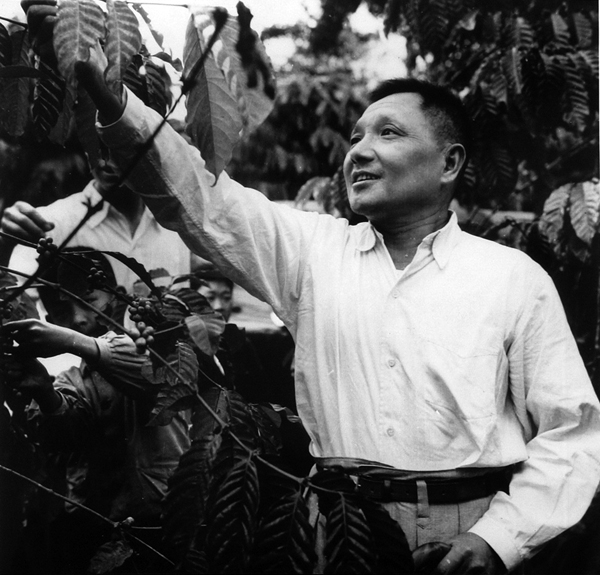
Brand weakening capacity shrinking Xinglong Coffee is in trouble
According to Hainan Daily, reporter Sun Hui used to be a brand that could break a hole even if it was thrown on the ground. The Sun River Coffee Factory, the first coffee processing factory in New China, was born here. After being tasted by many party and state leaders, Premier Zhou Enlai left Xinglong Coffee, a world-class sigh. Xinglong Coffee, once a household name, is the darling of supermarkets and specialty stores. However,

The History and present situation of Coffee cultivation in China
History of Coffee cultivation in the World Coffee originated in the tropics of northern and central Africa. It has been cultivated for more than 2000 years, and the Arabs began to plant it in 525 BC. At first, coffee beans were only used for chewing. In 890 AD, Arab merchants brought coffee to Yemen and made it into a drink for the first time. By the 13th century, Arabs had become in the habit of stir-frying coffee, but to

Introduction to the spread and Development Prospect of Coffee in China
The spread and development of coffee in China the history of coffee introduced into China is not long. It was not until 1884 that coffee was first planted in Taiwan Province of China. In the mainland of the motherland, the earliest coffee cultivation began in Yunnan. At the beginning of the 20th century, French missionaries brought the first batch of coffee saplings to Binchuan County, Yunnan Province, and began to grow coffee in the mainland. Chinese people already drink tea.

More than one million tourists come to drink coffee a year.
It would be nice to have a cup of coffee and stay here all afternoon. Wang Huahua, a white-collar worker from Haikou, said at Shenmu Cafe in Fushan Coffee Culture Town, Chengmai County, flipping through the magazine in his hand. In Wang Huahua's view, relieving the heavy work pressure, staying away from the city and tasting a cup of coffee is the state of life she yearns for. Hainan Xihuan high-speed railway has been completed and opened to traffic, benefiting from Qiongbei tourism
The Historical Progress of Coffee in China: how did Coffee enter China?
The history of coffee introduced into China is not long, and it was not until 1884 that coffee was first planted in Taiwan. In the mainland, the earliest coffee cultivation began in Yunnan. At the beginning of the 20th century, French missionaries brought the first batch of coffee saplings to Binchuan County, Yunnan Province, and coffee began to be grown on the mainland. In terms of natural conditions, many parts of our country, Latin America, South America, India and India

The price of Yunnan coffee is Yunnan coffee expensive?
Professional coffee knowledge exchange more coffee bean information please follow the coffee workshop (Wechat official account cafe_style) in metropolises, tens of yuan a cup of coffee is rare. However, in Yunnan Province, the main coffee producing area in China, the purchase price of coffee beans is about 15 yuan per kilogram. According to the figures released by the Yunnan Coffee Association, enterprises bought from farmers during the 2015-2016 harvest season.
Yunnan coffee production accounts for 99% of the country's lack of processing standards.
A cup of coffee costing tens of yuan is common in metropolises. However, in Yunnan Province, the main coffee producing area in China, the purchase price of coffee beans is about 15 yuan per kilogram. According to the figures released by the Yunnan Coffee Association, during the 2015-2016 harvest season, the average price of a kilogram of coffee beans purchased by enterprises from curry farmers is between 13 yuan and 14 yuan, and the market trade price is maintained at around 16 yuan. Coffee production in Yunnan
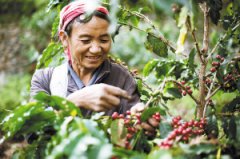
Yunnan Coffee and Chinese Coffee Market
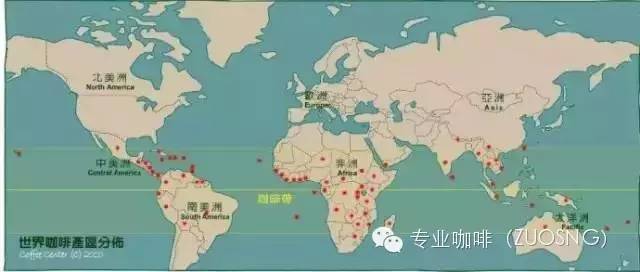
Coffee trees need high altitude, tropical climate and fertile soil to grow the best coffee beans. Such climatic conditions on earth surround the equator, about between 25 degrees north latitude and 30 degrees south latitude. This zone, commonly known as the golden coffee belt, belongs to tropical and subtropical regions and is technically called coffee belt. When it comes to coffee in the world, let's talk about Chinese coffee first.